22/04/2012

NOT The End

Intended as an April's Fool Day joke, my post on my conversion to noir proved to be quite effective. Too much effective, perhaps, as I still get comments and mails from readers thinking this change of heart is for real. As the French saying goes, the best jokes are the shortest and so I think it's time for some clarification. 

I'm not quitting, nor do I plan to in the near or distant future.

I'm still a (mostly) traditional-minded mystery fan. The edgier stuff I read is Thomas H. Cook. 

This blog will continue (at its famously irregular pace, so don't let any prolonged silence worry you) 

There will be no changes made to the editorial line. You can still expect articles on long-forgotten writers or the role of fingerprints in late-20s British crime fiction (good idea).

In brief, stay reassured that At the Villa Rose is still At the Villa Rose. 

And now back to (fictional) crime. 

20/04/2012

L'homme qui expliquait les miracles

Sans John Dickson Carr, vous ne liriez probablement pas ce blog. C'est la découverte émerveillée de l'oeuvre du maître des chambres closes qui fit définitivement bifurquer l'adolescent que j'étais vers le roman policier, tendance classique. Un quart de siècle plus tard, il demeure l'un de mes auteurs fétiches, l'un de ces heureux élus que je revisite régulièrement et dont je ne me lasse pas de chanter les louanges. Et celui qui s'avise d'en dire du mal devant moi, il a intérêt à courir vite.


Roland Lacourbe, lui aussi, est un fan. C'est même le fan numéro un de JDC en France, celui qui a le plus fait pour faire connaître et apprécier le natif d'Uniontown dans nos contrées; les carrophiles gaulois lui doivent beaucoup. Paru en 1998 aux indispensables éditions Encrage, son John Dickson Carr: scribe du miracle est un ouvrage en tous points remarquable, qui complète la superbe biographie (hélas inédite chez nous) de Douglas G. Greene. Lacourbe passe au crible l'oeuvre de Carr - les romans, les nouvelles, les pièces radiophoniques, les adaptations cinématographiques et télévisuelles - avec un enthousiasme et une érudition qui font plaisir à lire. Je ne suis pas d'accord avec tous ses jugements: je trouve en particulier qu'il a tendance à trop se focaliser sur l'intrigue et l'orthodoxie au détriment des qualités littéraires (réelles, n'en déplaise à certains) de l'oeuvre.  Je le rejoins par contre quand il fait remarquer que La chambre ardente (The Burning Court, 1937) qui est un chef-d'oeuvre, n'est pas le seul à l'actif d'un auteur qui disparaît trop souvent derrière ce seul livre. Et oui, Le barbier aveugle (The Blind Barber, 1934) est un livre désopilant. 


Si vous aimez John Dickson Carr et le roman d'énigme, ce livre doit trouver sa place dans votre bibliothèque - mais il y a de fortes chances qu'il y soit déjà.  


01/04/2012

The End

All good things must come to an end. So does this blog. I know my few but faithful readers will be shocked at the news but hopefully they will understand that intellectual honesty leaves me no other choice. My views on mystery fiction have dramatically evolved over the last weeks. 


It all began when I re-read Julian Symons's Bloody Murder which I hadn't read for a long time. To my surprise I found his stance less irritating, and some of his arguments struck me as sound. I was troubled - to say the least. I followed with Chandler's Simple Art of Murder and my reaction was the same - I found myself in almost complete agreement with him even as he eviscerated some of my favorite writers. How could it be? 


I thought revisiting the classics would bring me back to my sense. Alas! Quite the opposite happened. I found Christie boring and repetitive, Carr annoyingly unrealistic and mechanical; better not to say what I thought of Queen, Sayers or Marsh. Painful as it was, I had to admit Chandler and Symons had been right all along: Golden Age fiction just wasn't that good.


Still, I didn't want to give up on mystery fiction as a whole. So I tried other sub-genres I had thus neglected such as hardboiled and noir - and then came another surprise. I discovered that I liked those stories of tough guys and femmes fatales, the sparse writing, the unflinchingness in confronting the evils of society and the darkest side of life. Noir in particular was a revelation to me with authors like James Ellroy (whom I used to despise) and Jim Thompson suddenly becoming favorites of mine - I couldn't get enough of their stuff! I also reconciled myself with the French school of noir fiction: For years I had dissed the likes of Jean-Bernard Pouy or Didier Daeninckx and now I found they were actually terrific writers whose talent easily eclipsed those of my former favorites. Noir was the real thing! How could I have ignored it for so long?


So I'm closing on the doors of The Villa Rose but I'm not quitting blogging. I'm launching a new blog devoted to noir fiction, which I'll name The Dark Palace to keep some kind of a continuity with this one - it's always about houses! I'm aware many of my readers won't like my new stance but hey, that's just the way I feel and I can't change that. 


My new blog. 


12/03/2012

At the Scene of the Crime

Patrick kindly invited me on his blog to discuss René Reouven's 1996 crime novel "Souvenez-Vous de Monte-Cristo" (Remember Monte-Cristo) That's my first attempt at a four-hand composition and I quite liked it, I hope you will enjoy it too.

05/03/2012

Des nouvelles de René Reouven

Les apparitions publiques de René Reouven sont rares, très rares. On ne manquera donc pas cette (très et trop) courte vidéo où l'auteur du Détective volé parle de l'un de ses sujets de prédilection, Sherlock Holmes.

Signalons que Reouven vient de rompre plusieurs années de silence avec la publication d'un juvénile, Un trésor dans l'ombre, aux éditions Mango. Loué soit Jacques Baudou qui l'a convaincu de reprendre la plume!

02/03/2012

Chamber Music - Tribute to Lucio Dalla

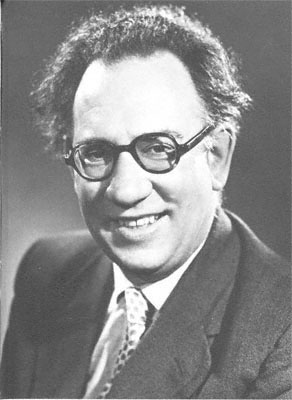
In Praise of... Julian Symons


Julian Symons was one of the most important crime/mystery writers to emerge in the years following WWII but you'd hardly guess it from the absent celebrations of his centennial. Though some of his books are still in print, the author of The Progress of a Crime is all but forgotten today. And it's a crying shame.

Readers of this blog know that I don't see eye to eye with Symons the critic. His opinions on the evolution of the genre or about some specific authors are not mine. But he certainly was one of the most knowledgeable and perceptive people ever to write on crime fiction, and while Bloody Murder certainly made (and occasionnaly still makes) my blood boil, it also introduced me to some writers I'd have been very, very sorry to miss: Symons, as he said about Chandler, was a very good critic of the work he liked. The nuance is an important one.

Symons wasn't just good at writing about other people's books; he also wrote some great books of his own. Unlike most ideologues (Yes I'm talking about you, Willard and Raymond!) he really practiced what he preached - most of the time. Having decided early that the traditional mystery form was too restrictive for his ambitions he tried and found new ways, new approaches. There is no mystery to speak of in his masterpiece, the Edgar-winning The Progress of a Crime but the book is a consummate example of what Symons termed the Crime Novel: sharp, powerful and uncompromising. Symons clearly had his point of view, but neither there or in the rest of his work did he let it stand in the way of objectivity. Were all "Crime Novels" like Symons's, I wouldn't spend my time complaining about modern fare. Yet, for all his professed modernism, Symons maintained a (guilty?) fondness for the clever, intricate plots of yore and he sometimes let it slip in his work. He was a much more complex figure than his public image allows.

His current neglect stems from two sources. First is that mystery fiction has a really short memory. We're no good at preserving the memories of our great men and women; Symons is just one of many important writers who fell under the radar after their death. Second is that the kind of crime fiction that is now prevalent is a far cry from that which Symons advocated and practiced. In the final edition of Bloody Murder Symons made clear that he had no time for noir, graphically violent thrillers or what he termed the "anti-establishment school" of crime fiction. To a modern critic his dismissal of such"luminaries"as James Ellroy, Robin Cook, Elmore Leonard or Thomas Harris sounds as blasphemy - and indeed Symons told about how a journalist interviewing him was taken aback by his (negative) judgment of Andrew Vachss. Hard to imagine Symons praising Denise Mina or Lee Child, though he might have liked Minette Walters or Thomas H. Cook.

Further reading:

Symons's list of the 100 best mysteries ever. Guess what, some items are on my list too.

Martin Edwards on Bloody Murder. Includes personal recollection of the man.

The Simple Art of Murder (not Chandler's treatise, but an exchange between Patrick and Sergio about Bloody Murder)


Archives du blog