Nobody asked for it but here they are nevertheless - my own twelve favorite crime/mystery stories! Hard as I tried to be more inclusive and contemporary than the 1950 jury, my list reflects my strong preference for vintage crime; the earliest story - which also happens to be the single French-language entry - is more than thirty years old. Also, despite my criticisms of the original Golden Dozen for being too biased towards traditional mysteries my own list heavily favors the genre too, though it makes room for two crime stories, one thriller and a story that defies any categorization. Finally, I had not realized until now the thing I have for Christmas mysteries - two of them feature in this list and I was about to add a third (Stanley Ellin's Death on Christmas's Eve) when I thought it might be a little too much. The keen-eyed will notice that my list has no title in common with the 1950 one but that's because 1°) I tried to be original - you'll tell me how well I've succeeded - 2°) I haven't read all of the stories in it and didn't rate the ones I read as highly as the jurors did*. But enough talk, here it is and feel free to use the comment sections to give your opinion and if needed throw me some tomatoes!
On Christmas Day in the Morning (Margery Allingham)
The Glass Bridge (Robert Arthur)
Blind Man's Hood (John Dickson Carr)
The Eye of Apollo (G.K. Chesterton)
Triangle at Rhodes (Agatha Christie)
The Adventure of the Naval Treaty (Sir Arthur Conan Doyle)
Moonlight Gardener (Robert L. Fish)
The Answer (Bruce M. Fisher)
Lonely Place (C.B. Gilford)
The Unlikely Demise of Cousin Claude (Charlotte MacLeod)
Lettres de mon malin (Pierre Siniac)
The Fall of the Coin (Ruth Rendell)
*The greatness of The Hands of Ottermole still eludes me to this day, despite Boucher's praise and Doug Greene's attempts at converting me. Naboth's Vineyard I find to be one the weakest entries in the Uncle Abner canon; The Age of Miracles would have been a much better choice.
06/07/2017


04/07/2017
Golden Dozens
 The April 1950 issue of Ellery Queen's Mystery Magazine deserves a place in the magazine's own hall of fame for introducing the world to John Dickson Carr's classic The Gentleman from Paris but the rest of the contents is equally impressive, boasting big names like Graham Greene, Rufus King, Margery Allingham or Lawrence G. Blochman. Anthony Berkeley is in too, with a reprint of The Avenging Chance, arguably his masterpiece in the short form and the matrix for his best-known novel, The Poisoned Chocolates Case. The story appears as part of a series devoted to the best mystery short stories ever - the Golden Dozen - as chosen by a "panel of perfectionists" composed among others of James Hilton, Howard Haycraft, John Dickson Carr, Anthony Boucher, Vincent Starrett, August Derleth, Viola Brothers Shore, Ellery Queen (of course) and James Sandoe. Queen's introduction provides us with both the official list of the "Lucky Twelve" and Sandoe's personal picks. Both lists overlap at times, but also bear some differences as we shall see.
The "official" Golden Dozen
The Hands of Mr. Ottermole (Thomas Burke)
The Purloined Letter (Edgar Allan Poe)
The Red-Headed League (Sir Arthur Conan Doyle)
The Avenging Chance (Anthony Berkeley)
The Absent-Minded Coterie (Robert Barr)
The Problem of Cell 13 (Jacques Futrelle)
The Oracle of the Dog (G.K. Chesterton)
Naboth's Vineyard (Melville Davisson Post)
 |
| James Sandoe |
The Yellow Slugs (H.C. Bailey)
The Genuine Tabard (E.C. Bentley)
Suspicion (Dorothy L. Sayers)
James Sandoe's Golden Dozen
The Avenging Chance
The Hands of Mr. Ottermole
The Other Hangman (Carter Dickson)
The Red-Headed League
The Gioconda Smile
Suspicion
Sail (Lester Dent)
The Yellow Slugs
The Honour of Israel Gow (G.K. Chesterton)
Death on Pine Street (Dashiell Hammett)
The Man Who Murdered in Public (Roy Vickers)
To a modern reader the most striking features of both lists are the heavy bias towards traditional detective stories and the strong showing of now comparatively obscure plot-spinners like Post, Futrelle, Bailey or Bentley. Agatha Christie, Raymond Chandler and Cornell Woolrich are nowhere to be seen. Hardboiled, noir and psychological suspense despite their popularity at the time with the reading public don't seem to exist (though Sandoe departs by including two hardboiled stories in his list)
This is not to say that their choices aren't good, for most of them are (don't get me started with Ottermole whose appeal I'll probably never understand) but they're typical of a mindset firmly stuck in the pre-WW2 years. A 2017 list would probably be more inclusive - but it would also lack most of the items listed here, which would be a pity. It would be interesting to know the other jurors's personal picks; I'm most curious as to Boucher's and of course Carr's (no risk of having him picking up a Chandler story!)
What would be your own Golden Dozen? Feel free to post it in the comments section or on the blog's FB page - maybe I'll post mine if someone's interested.
22/06/2017
What's New? Futrelle!
You may remember this article years ago in which I bemoaned the then-current rise of the ebook and pledged everlasting love to the printed paper. Amazon and its Kindle would never conquer me, I swore. Time passed and, well, only fools never change their minds as the old French saying goes. I now have two Kindles and use them a lot, mostly to read those long-lost, most but not all public domain, mysteries that the ebook bubble suddenly brought back to light. I still cling to my paper books and they prevail every time I'm allowed to choose, but I would have missed a lot of amazing stuff had I stuck to my initial Luddite feeling.
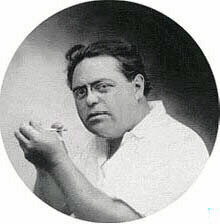
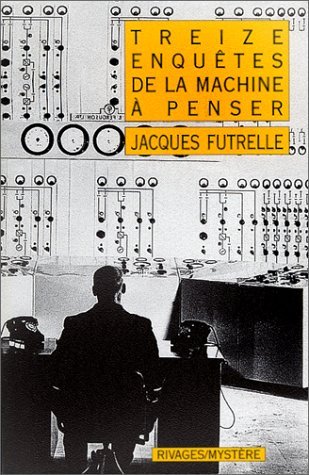
One of those digital discoveries is Jacques Futrelle and his Thinking Machine stories. Rediscovery would be a better word as I already knew both the creator and his creature for having read a sample of their output via Roland Lacourbe's excellent French-language anthology Treize enquêtes de la Machine à Penser. They made a more than favorable impression upon me and I was eager for more, but alas those thirteen stories were all that was available in French at the time, and my English was not yet good enough to allow me to read Futrelle in the original language. Besides, most of his stories were out of print and not easily available. I moved on to other, more recent writers but kept an eye on Amazon and other purveyors in the hope that someone reprints the whole Van Dusen canon.
Fast forward fifteen years and nearly all of Futrelle's output is available for free or very cheap in the Kindle store. I bought a Thinking Machine megapack and started to read, one story at the time, a little afraid not to be able to recapture my initial enthusiasm. I needed not worry: the stories I had read were as good as I remembered them, and the other were for the most part very pleasant surprises.
What amazed me and still amazes me most is how well the stories have aged - probably because they were ahead of their time in many respects. The plots are imaginative and clever if sometimes far-fetched and play fair with the reader at a time when it was not yet a requirement. They also use a lot of misdirection, which is another unusual feature in pre-Trent detective fiction. This is not to say that Futrelle saw his stories as a duel of wits between him and the reader, but neither did he think of them as pure exercises in ratiocination - he was out to puzzle and fool, not just lay down a problem and then provide an explanation.

Another modern feature of his work, perhaps the one that keeps it fresh after all those years, is the writing, which is much less stilted than that of his contemporaries, especially British ones. Being a journalist by trade Futrelle knew how to tell a gripping story with a few words and without excessive flourish. This kind of writing, which John Dickson Carr would call "journalese", would become a distinctive feature of the American school of crime fiction, regardless of the subgenre and may have been a leading factor in its global success and influence on the long run.
Finally there is the Thinking Machine, Augustus S.F.X. Van Dusen himself. Futrelle may have created him partly with his tongue in his cheek, as Van Dusen like Poirot later exhibits some physical features (the size and shape of his head in particular) that were bigger than life even then. Still, he is a memorable character and one of the best detectives of his time. Modern readers may find him unlikeable, but so were many of his colleagues at the time - readers then didn't seek to relate to a fictional detective but to be awed by him, and Van Dusen certainly delivers in that department. It is interesting to compare him with the other great detective scientist of the time, Freeman's Dr. Thorndyke - both share an encyclopaedic knowledge and near-universal expertise but Van Dusen has a more abrasive temper and speaks in a much less ornate way. Also, Van Dusen tend to rely less on arcane knowledge than Thorndyke's.
The only serious problem with Futrelle, and one he sadly couldn't fix, is that he died too soon to reach his full potential. Had he not embarked on the Titanic he might have gone to even greater things and maybe dramatically hastened the evolution of American crime fiction. Be that as it may, he remains of those few writers who gave its country a distinctive voice at a time when most of his fellow-compatriots contended themselves with channeling Conan Doyle.
One of those digital discoveries is Jacques Futrelle and his Thinking Machine stories. Rediscovery would be a better word as I already knew both the creator and his creature for having read a sample of their output via Roland Lacourbe's excellent French-language anthology Treize enquêtes de la Machine à Penser. They made a more than favorable impression upon me and I was eager for more, but alas those thirteen stories were all that was available in French at the time, and my English was not yet good enough to allow me to read Futrelle in the original language. Besides, most of his stories were out of print and not easily available. I moved on to other, more recent writers but kept an eye on Amazon and other purveyors in the hope that someone reprints the whole Van Dusen canon.
Fast forward fifteen years and nearly all of Futrelle's output is available for free or very cheap in the Kindle store. I bought a Thinking Machine megapack and started to read, one story at the time, a little afraid not to be able to recapture my initial enthusiasm. I needed not worry: the stories I had read were as good as I remembered them, and the other were for the most part very pleasant surprises.
What amazed me and still amazes me most is how well the stories have aged - probably because they were ahead of their time in many respects. The plots are imaginative and clever if sometimes far-fetched and play fair with the reader at a time when it was not yet a requirement. They also use a lot of misdirection, which is another unusual feature in pre-Trent detective fiction. This is not to say that Futrelle saw his stories as a duel of wits between him and the reader, but neither did he think of them as pure exercises in ratiocination - he was out to puzzle and fool, not just lay down a problem and then provide an explanation.
Another modern feature of his work, perhaps the one that keeps it fresh after all those years, is the writing, which is much less stilted than that of his contemporaries, especially British ones. Being a journalist by trade Futrelle knew how to tell a gripping story with a few words and without excessive flourish. This kind of writing, which John Dickson Carr would call "journalese", would become a distinctive feature of the American school of crime fiction, regardless of the subgenre and may have been a leading factor in its global success and influence on the long run.
Finally there is the Thinking Machine, Augustus S.F.X. Van Dusen himself. Futrelle may have created him partly with his tongue in his cheek, as Van Dusen like Poirot later exhibits some physical features (the size and shape of his head in particular) that were bigger than life even then. Still, he is a memorable character and one of the best detectives of his time. Modern readers may find him unlikeable, but so were many of his colleagues at the time - readers then didn't seek to relate to a fictional detective but to be awed by him, and Van Dusen certainly delivers in that department. It is interesting to compare him with the other great detective scientist of the time, Freeman's Dr. Thorndyke - both share an encyclopaedic knowledge and near-universal expertise but Van Dusen has a more abrasive temper and speaks in a much less ornate way. Also, Van Dusen tend to rely less on arcane knowledge than Thorndyke's.
The only serious problem with Futrelle, and one he sadly couldn't fix, is that he died too soon to reach his full potential. Had he not embarked on the Titanic he might have gone to even greater things and maybe dramatically hastened the evolution of American crime fiction. Be that as it may, he remains of those few writers who gave its country a distinctive voice at a time when most of his fellow-compatriots contended themselves with channeling Conan Doyle.
31/03/2017
MBE contre JDC
Les prénoms et nom de Maurice-Bernard Endrèbe ne disent plus grand-chose aujourd'hui qu'aux polardeux fondamentalistes tels que votre serviteur, mais il fut pendant plusieurs décennies l'un des piliers du roman policier français, en tant qu'auteur, critique, traducteur? éditeur et fondateur du Grand Prix de Littérature Policière. Il fut à son époque et demeure encore à ce jour ce qui se rapproche le plus d'un Anthony Boucher français et sa contribution ne doit pas être négligée: on lui doit au moins un chef-d'oeuvre incontesté (La Pire des choses) et il a traduit, popularisé et défendu nombre d'auteurs majeurs du genre - même s'il n'hésitait pas à retoquer/abréger/réécrire quand il le jugeait nécessaire, comme cela se faisait couramment en ces temps moins éclairés. Son dévouement sans faille et à contre-courant au roman d'énigme est également digne d'éloge. Il avait pourtant ses limites et surtout ses têtes. Il fut ainsi l'un des nombreux critiques français à "casser" du Ross MacDonald ce qui ne laisse pas de surprendre tant cet auteur est de tous les grands du "noir" le plus à même de séduire les tenants d'un classicisme strict. Une autre de ses têtes de turc, plus surprenante encore, était John Dickson Carr et c'est ce le sujet de ce post. Endrèbe traduisit plusieurs de ses livres, dont le célèbre (chez nous) La Chambre ardente, mais en bon français cartésien ne goûtait guère la veine plus... imaginative de l'auteur. J'avais cité dans un article de la version MSN de Mayhem Parva (disparue depuis) une recension par lui et Georges Rieben du Meurtre des Mille et une nuits où tous deux qualifiaient le livre d'absurde et regrettaient que le traducteur ne l'ait pas coupé de moitié; j'aurais pu citer également si j'en avais eu connaissance à l'époque la diatribe suivante que l'on trouve dans le courrier des lecteurs du numéro 32 de Mystère Magazine, Endrèbe répondant à un lecteur qui avait eu le front de considérer que les romans policiers anglo-saxons de l'époque étaient supérieurs à ce qui se faisait alors en France:
"Je passe à la lettre de M. Bruni et je suis obligé de protester quand il écrit que même les moins bons romans de Dickson Carr sont infiniment supérieurs à ceux de Pierre Boileau. J'en appelle à tous vos lecteurs: est-ce que Le Repos de Bacchus et Six crimes sans assassin ne valent pas vingt fois mieux que La Flèche peinte (sic), La Maison de la Peste, La Maison de la Terreur, Suicide à l'écossaise ou L'Habit fait le moine? Enfin, comme je ne traduis que des livres sélectionnés par moi - et il m'en faut bien lire vingt pour en trouver un bon - votre correspondant me rendrait un fier service en m'indiquant ceux auxquels il fait allusion dans son dernier paragraphe, mais s'il s'agit de The Blind Barber, It Walks by Night ou The Unicorn Murders de Dickson Carr, non merci!"
On s'amusera soixante ans plus tard de ce que les livres de Carr que Endrèbe considère comme des repoussoirs soient considérés par les spécialistes comme comptant parmi les chefs-d'oeuvre de leur auteur, alors que ceux qu'il estima dignes d'être traduits par lui sont (Chambre ardente excepté) relativement mineurs. Et osera-t-on dire que les livres de Boileau qu'il encense pâlissent un peu en regard du point de vue de l'astuce et de l'imagination? C'est après tout cohérent de la part de quelqu'un qui dans la même lettre considère que Noël Vindry n'a jamais écrit de véritable grand livre ou que Je ne suis pas coupable de Christie est un roman "faible", inférieur à Meurtre au champagne. La règle étant de ne jamais médire des morts, seul le silence s'impose - mais je serais curieux de savoir si M. Bruni ou quelque autre fan de Carr s'est manifesté pour défendre l'honneur du Maître de Mamaroneck.
"Je passe à la lettre de M. Bruni et je suis obligé de protester quand il écrit que même les moins bons romans de Dickson Carr sont infiniment supérieurs à ceux de Pierre Boileau. J'en appelle à tous vos lecteurs: est-ce que Le Repos de Bacchus et Six crimes sans assassin ne valent pas vingt fois mieux que La Flèche peinte (sic), La Maison de la Peste, La Maison de la Terreur, Suicide à l'écossaise ou L'Habit fait le moine? Enfin, comme je ne traduis que des livres sélectionnés par moi - et il m'en faut bien lire vingt pour en trouver un bon - votre correspondant me rendrait un fier service en m'indiquant ceux auxquels il fait allusion dans son dernier paragraphe, mais s'il s'agit de The Blind Barber, It Walks by Night ou The Unicorn Murders de Dickson Carr, non merci!"
On s'amusera soixante ans plus tard de ce que les livres de Carr que Endrèbe considère comme des repoussoirs soient considérés par les spécialistes comme comptant parmi les chefs-d'oeuvre de leur auteur, alors que ceux qu'il estima dignes d'être traduits par lui sont (Chambre ardente excepté) relativement mineurs. Et osera-t-on dire que les livres de Boileau qu'il encense pâlissent un peu en regard du point de vue de l'astuce et de l'imagination? C'est après tout cohérent de la part de quelqu'un qui dans la même lettre considère que Noël Vindry n'a jamais écrit de véritable grand livre ou que Je ne suis pas coupable de Christie est un roman "faible", inférieur à Meurtre au champagne. La règle étant de ne jamais médire des morts, seul le silence s'impose - mais je serais curieux de savoir si M. Bruni ou quelque autre fan de Carr s'est manifesté pour défendre l'honneur du Maître de Mamaroneck.
29/05/2016
Ba-bye
I'm done with blogging, at least for now. It's not another instance of writer's block but just the plain fact that I have nothing left to say.
When I started At the Villa Rose almost ten years ago, there was no other blog that I know of that dealt exclusively with vintage crime fiction and promoted it; everyone loved contemporary stuff and found no reason to explore what came before. Had anyone at the time said that Golden Age mysteries would soon be the rage and the British Library would reprint J. Jefferson Farjeon and F.W. Crofts, I and most of my few readers would have laughed it off.
A decade passed and everything changed. Other blogs appeared and suddenly vintage crime fiction was everywhere on the web; publishers finally took notice and broadened their horizons; people like Martin Edwards and Curtis Evans played a decisive part in bringing this about, with the former's towering "The Golden Age of Murder" winning almost every award going its way, something unimaginable ten years before.
As for At the Villa Rose... Its readership remained tiny, the infrequency and the brevity of the posting not helping it find a broader audience. Why would people read it anyway? Other blogs did the same thing much better, with more scope and erudition. I slowly lost my mojo though I didn't realize it immediately, my posts became ever more infrequent and now the blog is on hiatus indefinitely. Maybe the mojo will come back someday. Maybe it won't. As the French saying goes, "Qui vivra verra".
29/03/2016
Tuesday Night Bloggers: Sticking to the Formula
 This article is my contribution for this week to Tuesday Night Bloggers, a weekly event conceived by Curtis Evans of The Passing Tramp and hosted by Noah Stewart of Noah's Archives. The group's focus this month is on John Dickson Carr.
In his foreword to the fifth volume of the French edition of John Dickson Carr's complete works, scholar Tony Medawar ventures to write that, maybe, some of the Master's works might have been better or even better had they dispensed with his trademark impossible crimes. My first reaction when reading this (I was fifteen years younger, and very defensive when it came to my then-favorite crime writer ever) was of bewilderment as it was so counter-intuitive. Wasn't Carr famous for his "astonishing skill" (Julian Symons) at devising new ways to enter/exit a locked room or leave no footprints on sand or snow? Weren't those his trademark? Would JDC without impossible crimes be "just another humdrum" as a much missed member of the now-defunct "Fans of John Dickson Carr" Yahoo group put it?
 At this point I hadn't yet (and still haven't) read the whole Carr catalogue - the historicals in particular remained terra incognita for me. Having now a firmer grasp on the Master's work I can see Medawar's point - and I agree with it. Carr was obviously very fond of impossible crimes - hey, he proclaimed Gaston Leroux's The Mystery of the Yellow Room to be the best mystery novel ever written - and he also knew which side his bread was buttered - readers wanted him to write that kind of story - but he was perfectly able to do without them, as a novel like The Emperor's Snuff Box demonstrates. And yet he often seemed, especially in later years, to be a prisoner of his own formula, forcing it on stories that could/would have been just as good, or even better, without it. She Died a Lady, which I read recently, is a case in point. By every standards the book is splendid - great plot, great atmosphere, great characters. And yet... the impossible crime, clever as it is, seems strangely out of place; the book would have functioned just as well as a straightforward mystery - the plot is not dependent on it. In some other cases (Dark of the Moon) the impossible crime fits in the picture but is poorly motivated (a rare occurence in Carr's work, as he unlike, say, Paul Halter took great care to give his murderers sound motives for acting the way they did) while in later works like Papa La Bas or Scandal at High Chimneys it is so poorly conceived and resolved as to look like mere fan service.
 This raises a question: Was Carr too formulaic for his own good? And another: Did his adherence to the impossible crime genre hinder his development as a writer? Aforementioned Emperor and Lady seemed to suggest Carr was taking a more "naturalistic", "psychological" direction - the one his friend Ellery Queen had taken some years before. Why did he finally cop out? His post-war work hints that the decision brought no joy and certainly no revival of inspiration. We are forever to wonder what might have become of Carr had he finally opened the windows of his locked rooms.
15/03/2016
Tuesday Night Bloggers: John Dickson Carr, American writer
 This article is my contribution for this week to Tuesday Night Bloggers, a weekly event conceived by Curtis Evans of The Passing Tramp and hosted by Noah Stewart of Noah's Archives. The group's focus this month is on John Dickson Carr.
Counter-intuitive? Only in appearance. Carr's brand of baroque, lurid crime fiction with its emphasis on the spectacular, the surreal and the suspenseful, owes little to the more restrained British tradition. His stories are not rational, civilized affairs solved by rational, civilized detectives - their structure is both more convoluted and more relaxed than your average British whodunit. Also, his outlook is definitely that of a foreigner hailing from a more "democratic" society, as evidenced by his disregard of class structures and conventions, especially when it comes to the relations between the sexes. Finally, there's the humour which relies more on slapstick than wit or nonsense. All this sets Carr apart from most British crime writers but puts him a lot closer to American colleagues such as Ellery Queen, Clayton Rawson (both were close friends) Fredric Brown or even Mary Roberts Rinehart - there is a whole study to be written on HIBK influence on Carr. There's no way to know whether he himself was aware of that, but this was, in a way, acknowledged by his fellow-compatriots as his influence proved stronger and more enduring in America (where most of his literary progeny hails from) than in his adopted country.
This is not to say that there are no British ingredients in the Carr mixture - there are actually quite a few, from Conan Doyle to Montague Rhodes James - but the result tastes very American. Or should we say, "Carrian"?
Inscription à :
Articles (Atom)